 Kevin
Kevin
More images available on deviantart
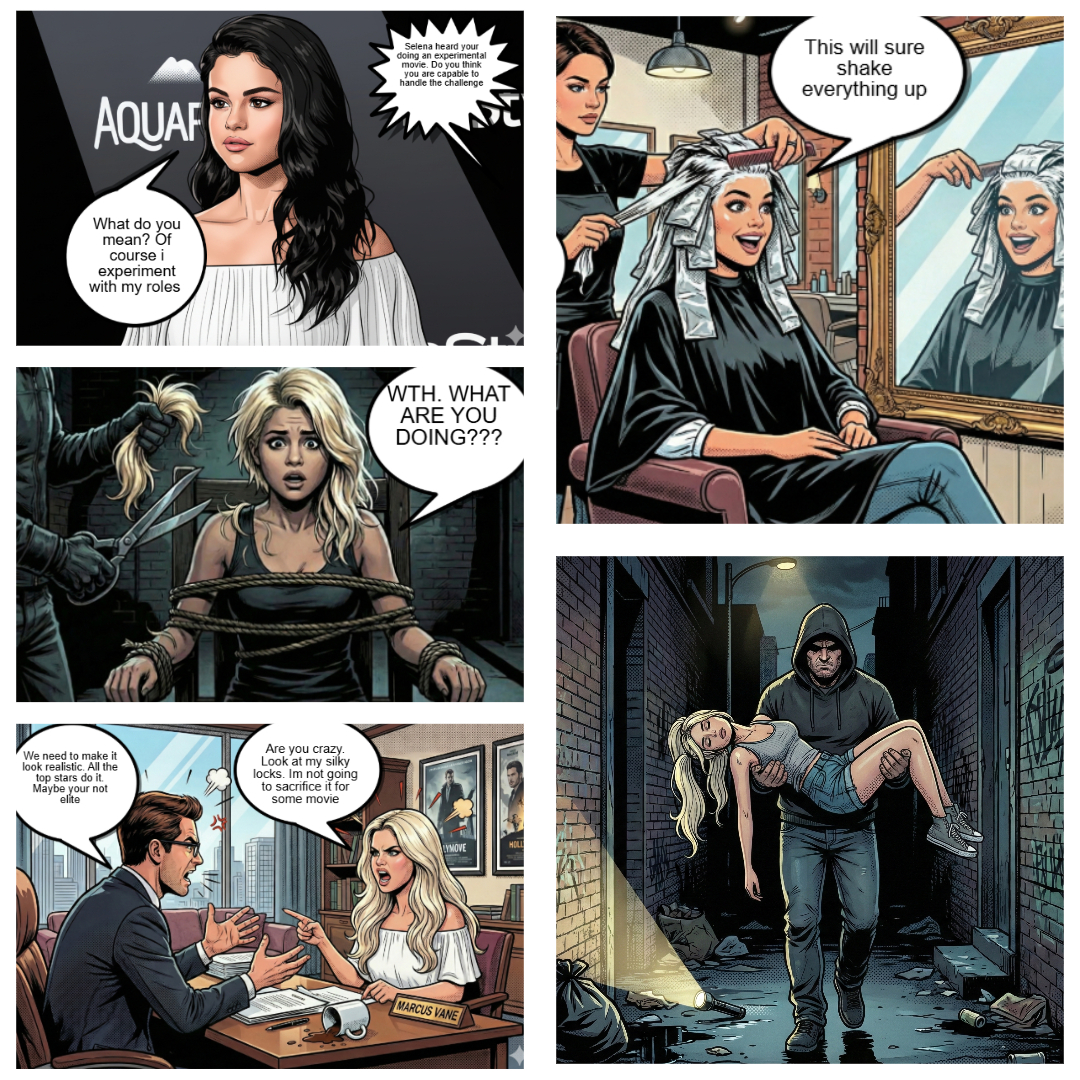
The tabloids had been merciless for weeks. “Selena Gomez Plays It Safe Again,” screamed one headline after a red-carpet appearance in a sleek black gown and her signature long, dark waves. “America’s Sweetheart Refuses to Take Risks,” sneered another, complete with side-by-side photos of her looking virtually unchanged since 2017. The word they kept using was “vanilla.” Safe. Predictable. Boring.
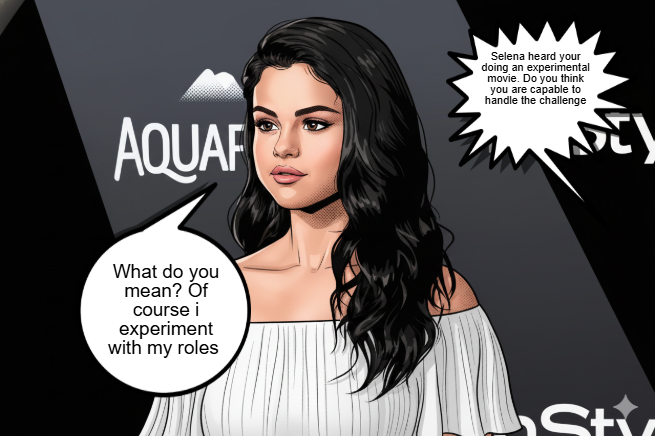
Selena read every article in the back of her SUV on the way home from a late-night talk show, the city lights streaking across the windows like accusations. She wasn’t angry at first—just tired. Then one particularly vicious blog post ended with the line, “At this point, Selena Gomez changing her hair would be bigger news than any movie she’s in.”
She stared at the phone screen until it blurred.
The next morning, she called Chris McMillan—her stylist of fifteen years—and told him, voice steady, “I want to go blonde. Like, platinum. And I want bangs. Real ones. The kind that hit my eyelashes.”
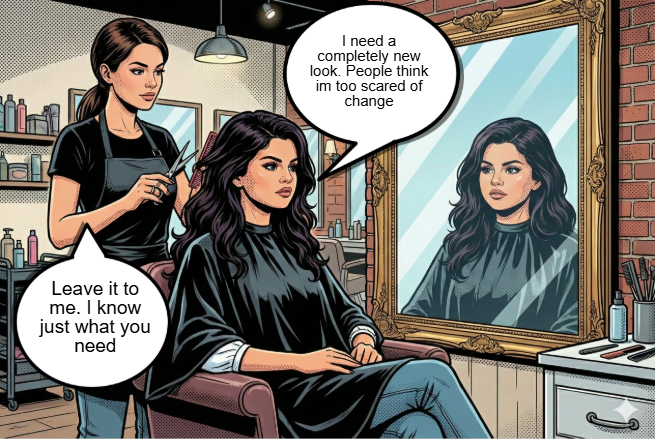
Chris paused so long she thought the call dropped. “Sel, are you sure? That’s… a lot of lift. And bangs are a commitment.”
“I’m sure,” she said. “Book the whole day.”
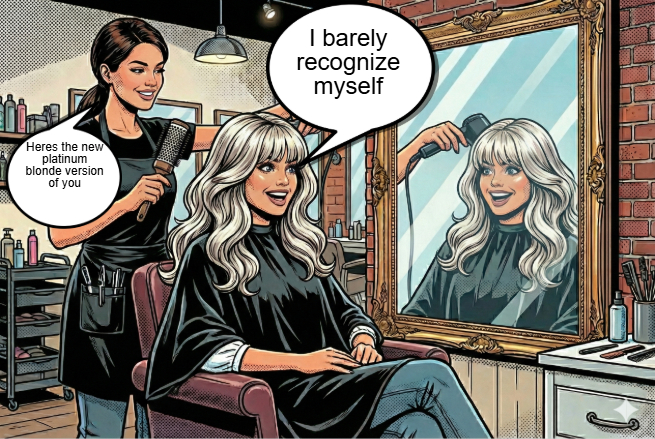
Twelve hours later she walked out of the salon with ice-blonde hair swinging just past her shoulders and thick, blunt fringe that made her brown eyes look enormous. The paparazzi outside lost their minds. Phones flashed like gunfire. Within an hour #SelenaBlonde was trending worldwide. She posted one selfie—hair damp, bangs messy, middle finger barely in frame—and captioned it, Safe enough for you?
The internet exploded. Some called it a midlife crisis at thirty-three. Others called it iconic. Selena didn’t care. For the first time in years she felt the delicious burn of having done something reckless just because she wanted to.
Three weeks later she started shooting Echoes in the Dark, a psychological thriller in which she played Maya Delgado, a true-crime podcaster kidnapped by the very killer she’s been investigating. The script was brutal, intimate, and—most importantly—being directed by Luca Verdier, the French auteur whose last film had won the Palme d’Or. Luca had courted her for the role for two years. When she finally said yes, he’d wept on the phone.
The trouble started in pre-production, over one scene on page eighty-seven.
Maya, bound to a metal chair in an abandoned warehouse, taunts her captor until he snaps. In a fit of rage he grabs a pair of shears and hacks off her hair—first in violent, uneven chunks, then shorter and shorter until he finishes the job with electric clippers, leaving her nearly bald. It was meant to be the emotional nadir of the film: the moment Maya’s identity is literally stripped away.
Selena read it and felt her stomach drop.
“I’m not cutting my hair,” she told Luca flatly during their first chemistry read with Julian Kaye, the British actor playing the killer. “We can use a wig. Or VFX. Whatever it takes.”
Luca’s eyes softened behind his wire-rimmed glasses. “Selena, the scene is about violation. If the audience knows it’s fake, the moment dies.”
“I understand that,” she said, “but this is real hair I just bleached the hell out of. It’s taken thirty-three years to grow. I’m not shearing it off for ninety seconds of screen time.”
Julian stayed quiet, watching the negotiation like a tennis match.
Luca exhaled through his nose. “Fine. We will find a solution. Trust me.”
She wanted to trust him. She really did.
The morning of the warehouse scene, Selena arrived on set with her new blonde hair hidden under a silk scarf. The crew greeted her with the usual warmth, but she could feel the buzz of anticipation. This was the scene everyone had been whispering about for weeks.
Luca pulled her aside. “We’re going to do exactly as you asked,” he promised, squeezing her shoulders. “Wig lace, fishing line for the falling pieces, a little CGI cleanup in post. Julian will mime the cutting. You’ll be perfect.”
She studied his face and decided to believe him.
They shot the dialogue first—Maya spitting venom while Julian’s character circled her like a shark. The binds on her wrists and ankles were real (safety clips hidden beneath the rope), and the metal chair was freezing against her bare back. By the time Luca called for the haircut portion, Selena was deep in character, tears streaking her cheeks, voice raw.
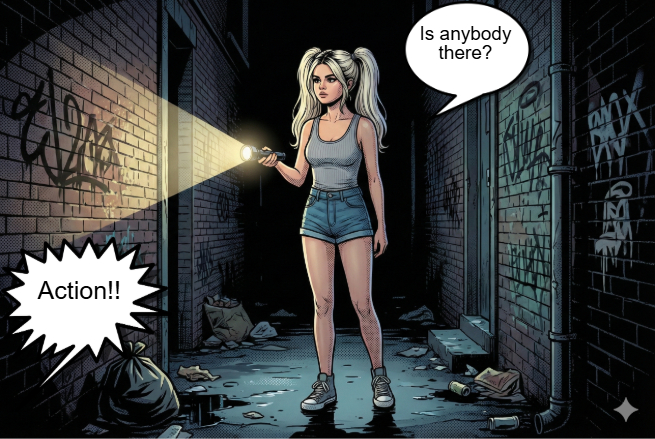
Julian picked up the shears—dulled for safety, she’d checked herself—and began the pantomime. Snip, snip, snip in the air beside her head. Pre-cut bundles of blonde hair extensions, glued to fishing line, dropped to the floor in perfect choreography. The sound department added the metallic slice of scissors in post. It was flawless.
Selena relaxed a fraction. Almost over.
Julian leaned in, breath hot against her ear, and whispered, “I’m sorry, love,” so quietly she almost missed it.
Then the cold metal touched her real hairline.
The first cut was surgical—straight across her forehead, severing her brand-new bangs in one brutal snip. The severed fringe fluttered to the warehouse floor like a dead bird.
Selena’s scream was not acting.
Julian didn’t stop. He sawed through the length at her jaw, blonde strands raining down her shoulders. The crew stood frozen. Someone’s coffee cup slipped and shattered.
“Cut!” Selena shrieked. “Luca, CUT!”
But Luca didn’t call cut. He stood behind the monitor, arms folded, watching.
Julian switched to smaller scissors now, carving the remaining hair into a jagged bob that barely brushed her chin. Selena thrashed against the ropes, tears no longer manufactured. The safety clips snapped; her wrists bled.
“Stop! Stop it, please—”
Julian set the scissors down, almost gently, and picked up the clippers. They buzzed to life with a sound like an angry hornet. He started at her forehead and plowed a stripe straight back, blonde velvet piling on her lap. Again. Again. The vibration rattled her teeth. Within ninety seconds she was left with half an inch of pale stubble.
The clippers clicked off.
Silence rang louder than any scream.
Julian stepped away, face unreadable. Luca finally approached, crouching so they were eye level.
“Selena,” he said softly, “look at me.”
She couldn’t. She was staring at the mountain of her own hair on the concrete, shimmering like spilled gold.
“That was the most honest piece of acting I’ve ever seen,” Luca continued. “You felt real terror. Real loss. The audience will feel it in their bones.”
“You lied to me,” she whispered.
“I gave you truth,” he countered. “And you gave me genius.”
She started to shake—with rage, with cold, with the sudden terrifying lightness on her scalp. A production assistant draped a blanket over her shoulders. Someone else swept the hair into a trash bag like evidence.
Luca stood. “We have one more setup. The final reveal when Maya sees herself in the cracked mirror. For that… it needs to be skin.”
Selena laughed, a broken sound. “You want me to shave it bald. Actually bald.”
“It’s the only way the reflection reads as shocking on camera,” he said. “I brought a kit. Professional. You can do it yourself, in private, when you’re ready. Or we can reshoot everything with a bald cap and pray the lace never shows.”
He placed a small black dopp kit in her trembling hands.
Selena stared at it for a long time.
Then she stood up, letting the blanket fall, and walked to the portable makeup trailer alone. She locked the door, sat on the closed toilet lid, and opened the kit.
Inside: a cordless Wahl shaved bald every day of his life, a can of shaving cream, a safety razor, and a bottle of aftershave balm.
She turned on the clippers again—no guard this time—and ran them over her head herself, watching the last half-inch of blonde disappear into the sink. The sensation was alien, exhilarating, awful. When only pale fuzz remained, she lathered her scalp with cream that smelled like eucalyptus and took the razor in shaking fingers.
Stroke by stroke, she erased what was left of the old Selena.
When she stepped out twenty minutes later, the set had cleared except for Luca and the camera operator Anna. Selena’s scalp gleamed under the practical fluorescents, strangely elegant, the shape of her skull delicate and fierce.
Luca’s eyes filled. “Thank you,” he said simply.
They shot the mirror scene in one take. Maya—no, Selena—stared at her reflection and saw a stranger: hollowed cheeks, huge wet eyes, naked skull. She touched the glass with bound hands and began to laugh, the sound splintering into sobs. It was the most frightening, alive thing she’d ever put on film.
Six months later, Echoes in the Dark premiered at Venice.
The ten-minute standing ovation started the moment the final frame cut to black. Critics who’d spent years dismissing Selena as “pretty but limited” wrote things like “a career-redefining supernova” and “the bravest performance by an American actress this century.” The haircut scene—uncut, unflinching—became instant film-school legend. Young actors tattooed the date of the premiere on their wrists.
Selena attended every festival bald and unapologetic. She wore backless gowns that showed the elegant curve where hair used to fall. She let photographers shoot her scalp from every angle. When talk-show hosts asked if she missed her hair, she smiled and said, “I miss a lot of things. But not that version of me.”
One night in Toronto, a little girl with chemotherapy alopecia approached her outside the theater, clutching a Sharpie.
“Miss Gomez… will you sign my head?”
Selena knelt, uncapped the marker, and wrote in looping script across the child’s smooth scalp: You are enough.
Then she pressed a kiss to the crown of the girl’s head and walked into the spotlight, shining like a comet that had burned away everything unnecessary to reveal its core.
And somewhere, in the back of her mind, she could still hear the buzz of clippers—like a lullaby made of metal and nerve—reminding her that sometimes the most terrifying choice is the one that sets you free.
