 Kevin
Kevin
Check out the full comic version on my patreon
Part 1: The Weight of the Cage
The silence of the luxury Parisian suite was a heavy, suffocating thing, contrasting sharply with the chaotic energy brewing just beyond the heavy velvet curtains. Anya sat near the floor-to-ceiling window, her knees pulled to her chest, peering through a small, deliberate crack in the thick fabric. The plush carpets, the crystal chandeliers, the room service cart bearing untouched delicacies—it all meant nothing when the perimeter was so heavily guarded by flashing lights. A gilded cage, she thought bitterly, resting her forehead against the cool glass, is still a cage.
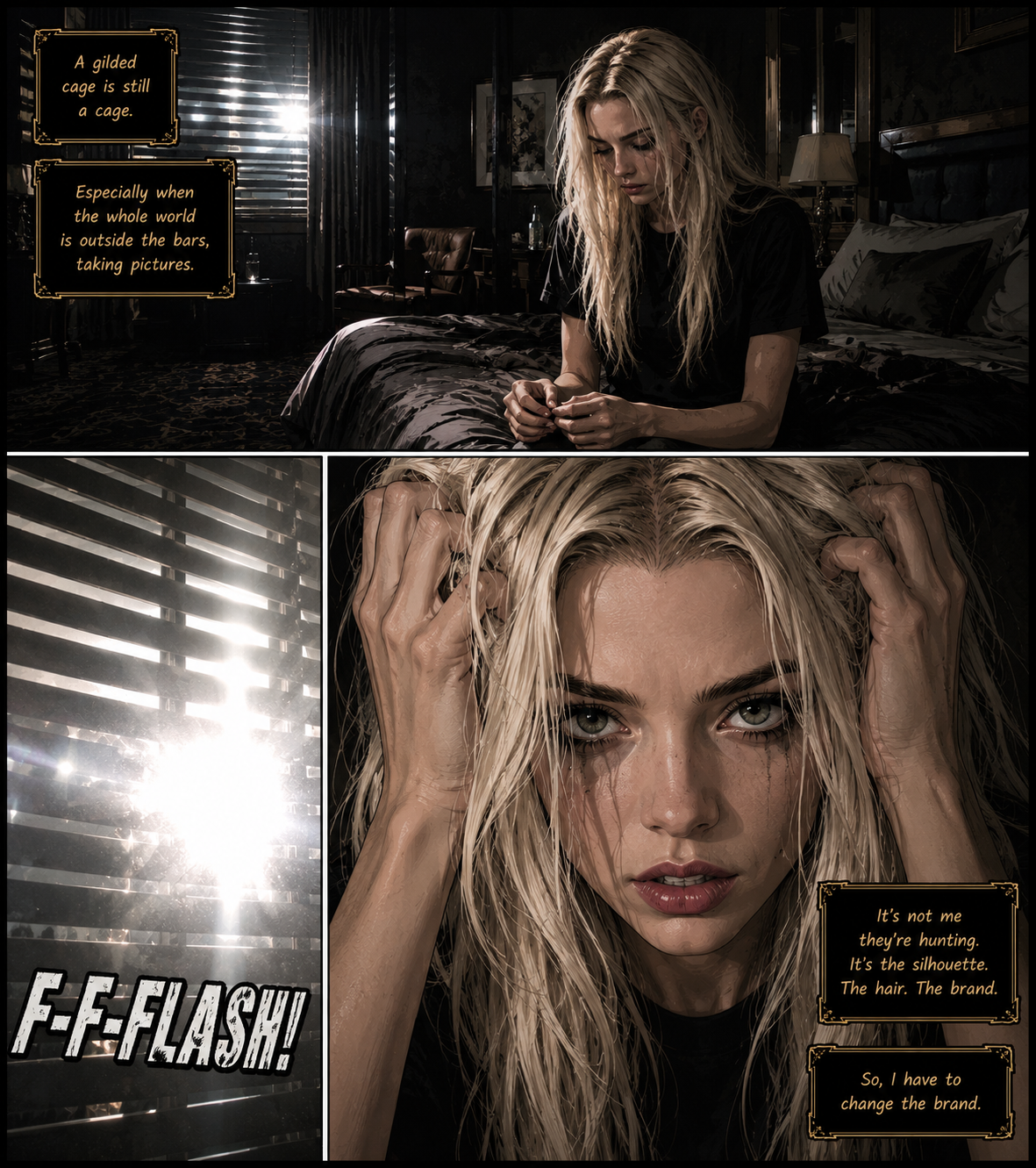
It was especially exhausting when the whole world seemed to be waiting outside the bars, armed with cameras and insatiable curiosity. Every few seconds, the damp darkness of the street below was punctured by a violent, strobe-like burst of white light. It was a relentless visual assault that demanded a piece of her energy every single time she stepped out the door. But as she watched them swarm like restless insects around the hotel’s grand entrance, a cold, striking realization settled over her. They weren’t hunting her. Not really. It’s not the girl who loves reading quietly by a fire or drinking black coffee in perfect peace that they want. It’s the silhouette. The hair. The brand.
She was a recognizable commodity, a geometric shape they had been trained to spot and consume without a second thought. The logic of her situation was beautifully simple, yet terrifyingly absolute in its demands: if the brand is the target, I have to change the brand.
She retreated to the sprawling marble bathroom, the bright vanity lights highlighting the deep exhaustion pooling under her eyes. On the counter sat her hasty rebellion: a temporary fix. It was a cheap box of hair dye she had asked a PA to grab from the corner store hours ago. She ripped open the flimsy cardboard, her hands shaking slightly as she mixed the pungent chemicals in the small plastic bottle. The smell of ammonia instantly filled the pristine space. As she squeezed the vibrant, blood-red paste into her signature pale blonde hair, it made a wet, visceral squelch. She worked it in frantically, staining her fingertips and ruining the hotel’s pristine white towels with smears of crimson.
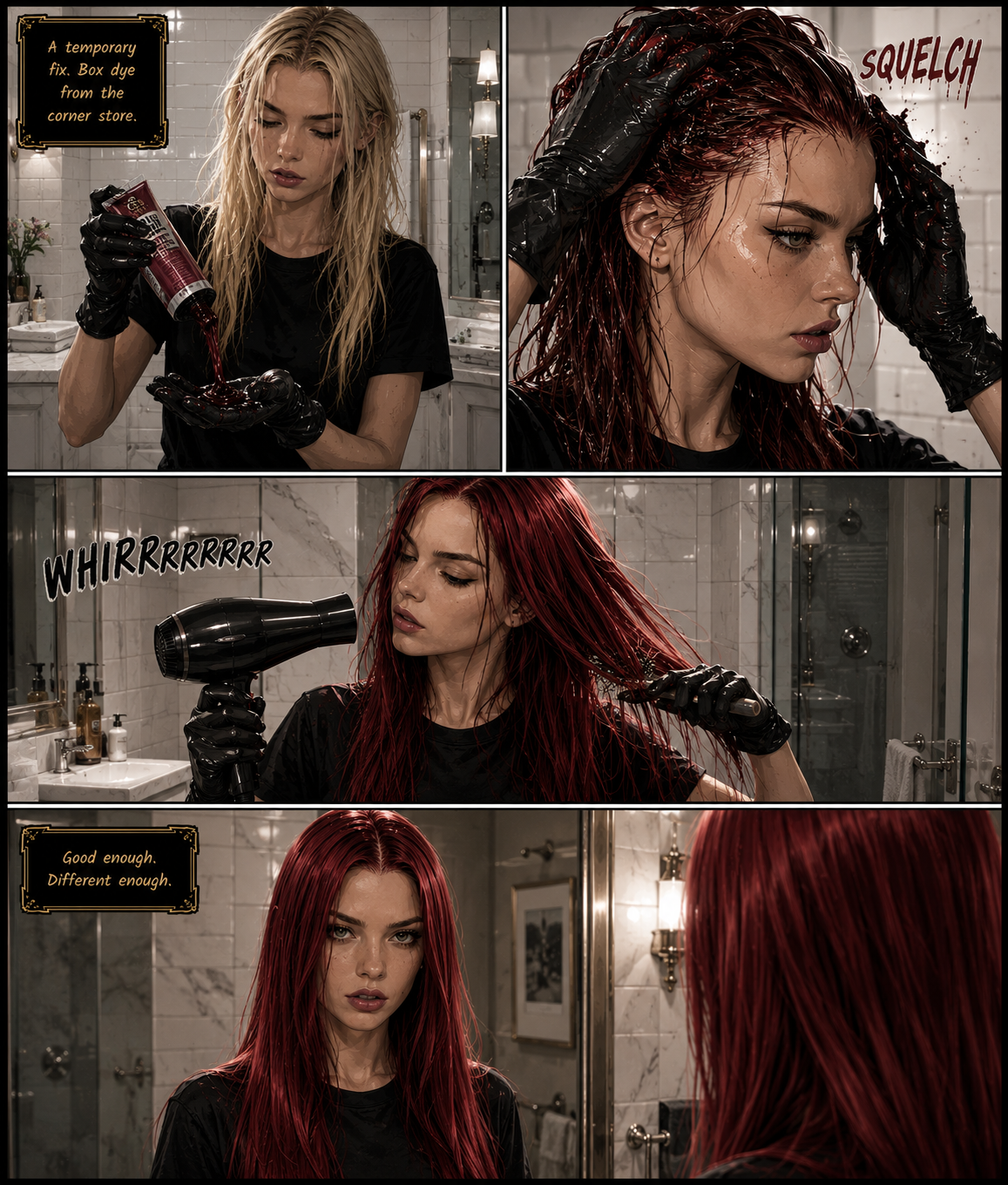
After washing the thick mixture out in the expansive glass shower, the loud whir of the hairdryer filled the echoing room, blowing the wet strands into a wild, crimson halo. She stared at the stranger in the mirror. Her striking features were framed by a bold color she had never worn outside of a carefully lit movie set. It was jarring. “Good enough,” she whispered to herself, her voice bouncing off the tiled walls. “Different enough.”
Part 2: A Brighter Target
Pulling the heavy collar of a beige trench coat up to her chin and sliding on a pair of thick, dark sunglasses, Anya slipped out of her room. The hotel hallways were grand and silent, a stark contrast to the adrenaline currently pumping through her veins. I just need to get to the airport, she told herself, repeating it like a desperate, grounding mantra. Walk fast. Keep my head down. Don’t look at them. As she approached the glass revolving doors of the lobby, she spotted the gauntlet of photographers waiting outside in the damp night air. Their breath plumed in the cold, their lenses pointed like weapons at the entrance. She took a deep breath, tightening the belt of her coat. They are looking for a platinum blonde, she rationalized, clutching her leather bag. I’m invisible.
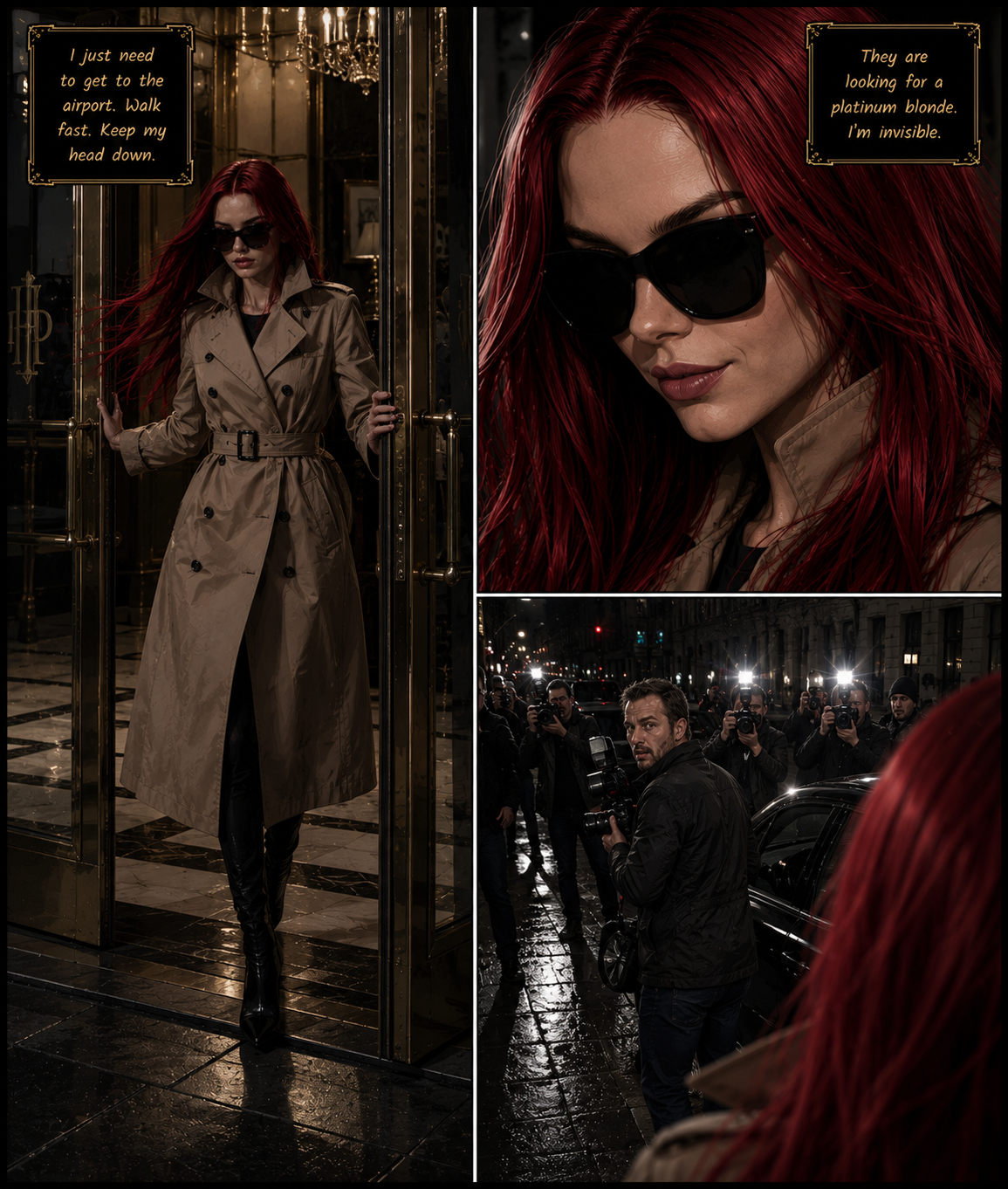
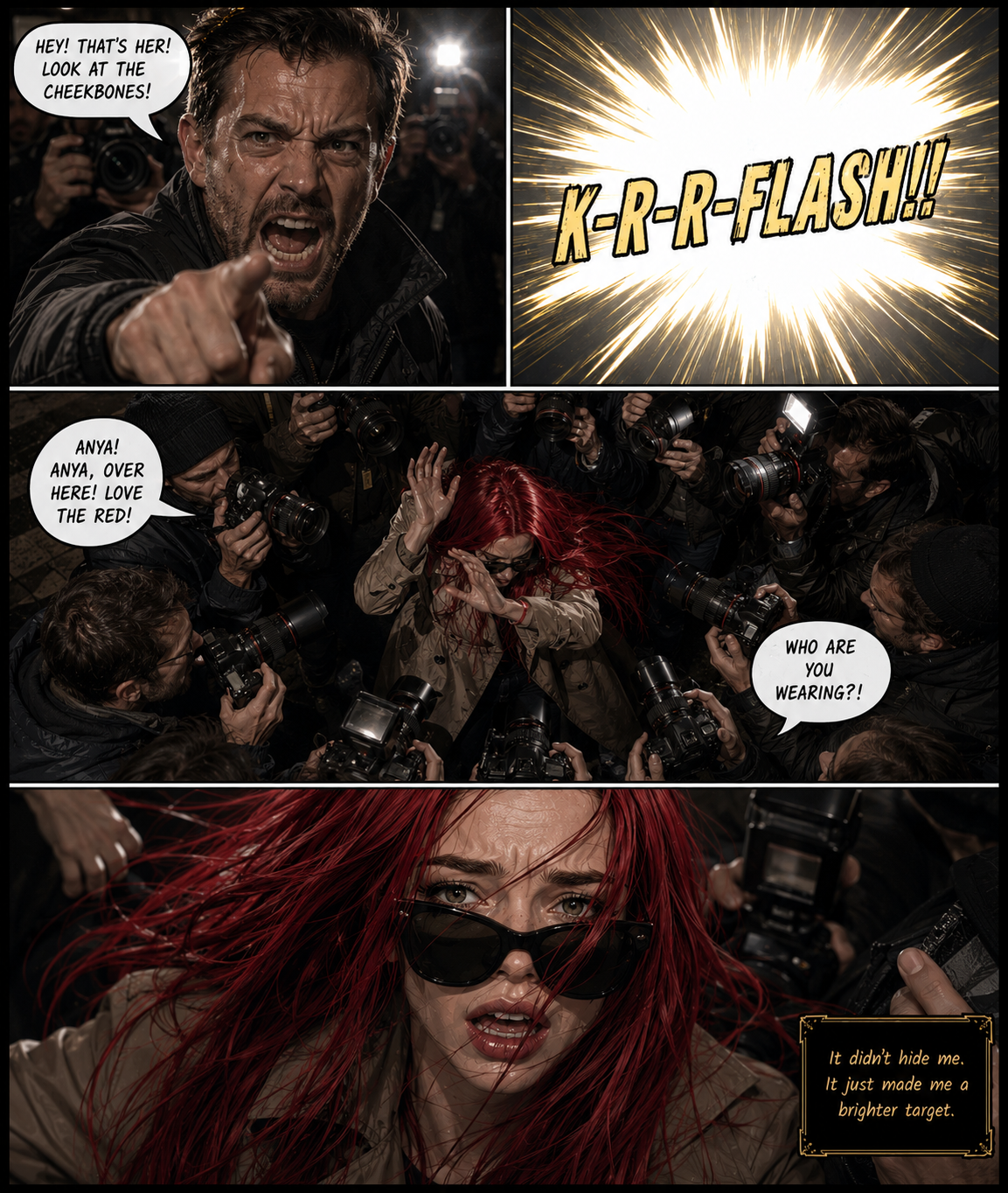
She pushed through the revolving door and stepped onto the wet pavement. For a split second, there was blessed silence. The paparazzi glanced at the redhead in the trench coat and looked away. Relief washed over her—until a sharp, familiar voice cut through the ambient hum of the city.
“Hey! That’s her! Look at the cheekbones!”
The illusion shattered instantly. The mob surged forward, transforming from a loose gathering into a tidal wave of lenses, elbows, and shouting voices.
“Anya!” they screamed, the sound echoing off the stone buildings. “Anya, over here! Love the red! Look this way!”
The assault began anew, a blinding barrage of flashes that momentarily turned the night sky a stark, artificial white. Microphones and digital recorders were thrust toward her face, breaching her personal space. “Who are you wearing?!” a reporter shrieked over the deafening din, completely oblivious to her visible distress.
Panic flared hot in her chest, but years of training kicked in. She kept her face entirely impassive, pivoting sharply and pushing her way back toward the building’s side alley. The dye job was a catastrophic failure. It didn’t hide me, she realized with bitter clarity as she broke into a run. It just made me a brighter, more interesting target. Panting slightly as she ducked into the deep shadows of the alleyway, she understood her fundamental mistake. A different color doesn’t change the underlying shape. The unique architecture of her face, the specific way she carried herself—it was all too distinctive. With the vivid red hair, she didn’t look like a normal person trying to vanish; she just looked like a famous actress preparing for an edgy new role.
She found a heavy metal door marked “Service Exit” and slipped inside, pulling the heavy steel shut to cut off the screams of the paparazzi. Leaning against the cold, damp wall in the dimly lit service corridor, she knew a superficial change would never be enough to buy her freedom. I have to destroy the canvas completely. She checked her watch in the gloom. It was 2:00 AM. The night was far from over.
Part 3: Stripping the Canvas
She slipped out through a rear loading dock, successfully evading the remaining photographers, and began to wander the quiet, winding streets of Paris. The cobblestones glistened with a light, misty drizzle, reflecting the soft glow of the streetlamps. She walked for miles, letting the cold air clear her head. Eventually, an old neon sign flickered into view, the letters buzzing softly in the dark.
She paused, peering through the rain-streaked glass of a vintage establishment. It was a barbershop. An ancient, leather-upholstered chair sat empty under a warm, yellow bulb, surrounded by antique mirrors and shaving mugs. I think I’m getting an idea, she thought, a dangerous, exhilarating thrill replacing her previous fear. The painted lettering on the brick outside was delightfully simple, offering exactly what she needed.
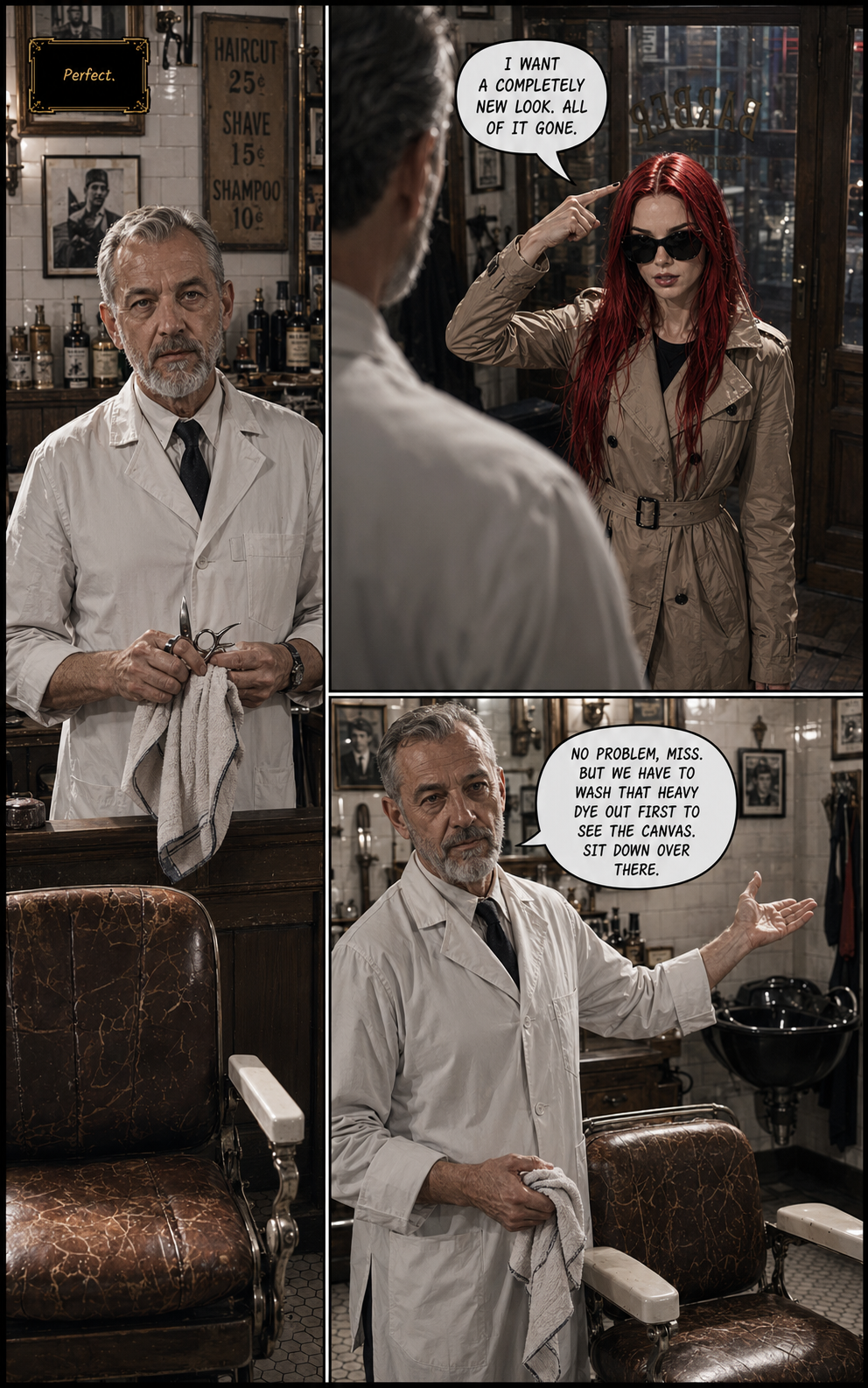
She pushed the heavy wooden door open, triggering a cheerful chime from the brass bell mounted overhead. The shop smelled wonderfully of talcum powder, old cedar wood, and sharp antiseptic. It was perfect—a place built for utility, not glamour. A weathered wooden board on the wall listed the modest prices: haircuts, hot towel shaves, basic shampoos.
An older man, sweeping the black linoleum floor in a crisp white smock, looked up in utter surprise at his late-night customer. Anya didn’t hesitate or offer apologies for the hour. She unbuttoned her trench coat and stepped into the light.
“I want a completely new look,” Anya told him, her voice remarkably steady. “All of it gone.”
The barber rested his broom against the wall and studied her for a long moment, his seasoned eyes lingering on the unnatural crimson hue of her hair and the clear exhaustion in her posture. He didn’t ask questions; he seemed to understand that she was running from something, even if he didn’t know what.
“No problem, miss,” he replied gently, his voice a low rumble. “But we have to wash that heavy dye out first to see the canvas we’re working with.”
He pointed toward an old, deep ceramic basin in the corner of the shop. “Sit down over there.”
Anya obliged, leaning back and resting her neck on the cold porcelain rim. As the scalding hot water hit her scalp, the barber began to scrub with a heavy, industrial shampoo. “Cheap box dye,” he noted, his experienced hands working the thick, foamy lather into her roots. “It’s stubborn, but the hot water and the soap will break it down.”
Anya closed her eyes, letting out a long breath as she willed the crimson color down the drain. Strip it away, she thought fiercely. Every single lie. Every expectation. The rhythmic rushing sound of the running water was a comforting white noise, finally drowning out the lingering, phantom echoes of camera shutters. She was going back to blonde, back to the absolute foundation, before tearing it all down.
Part 4: The Geometry of Fame
She sat up, and the barber draped a heavy, black plastic cape over her shoulders, fastening it tightly at the nape of her neck. He vigorously towel-dried her hair, revealing the pale, icy blonde beneath the faded red stains. She stared straight ahead into the large, ornate mirror.
There it is, she thought. The real thing.
Her hair hung in wet, heavy, familiar sheets. It was undeniable and unmistakable—the very hair that had graced a thousand magazine covers, the hair that stylists spent hours perfectly tousling. But tonight, it felt like chains. And tonight, it was ready to fall.
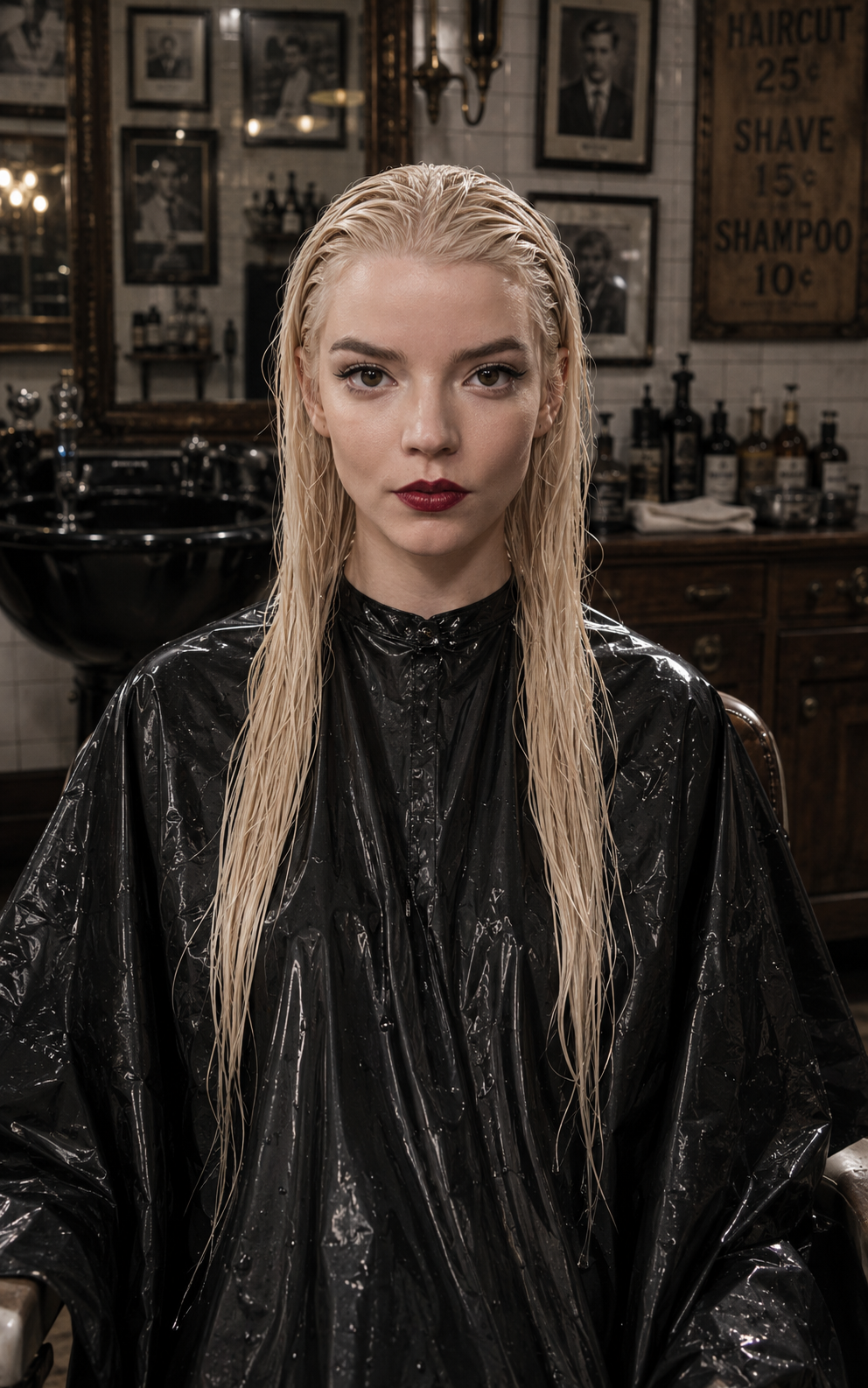
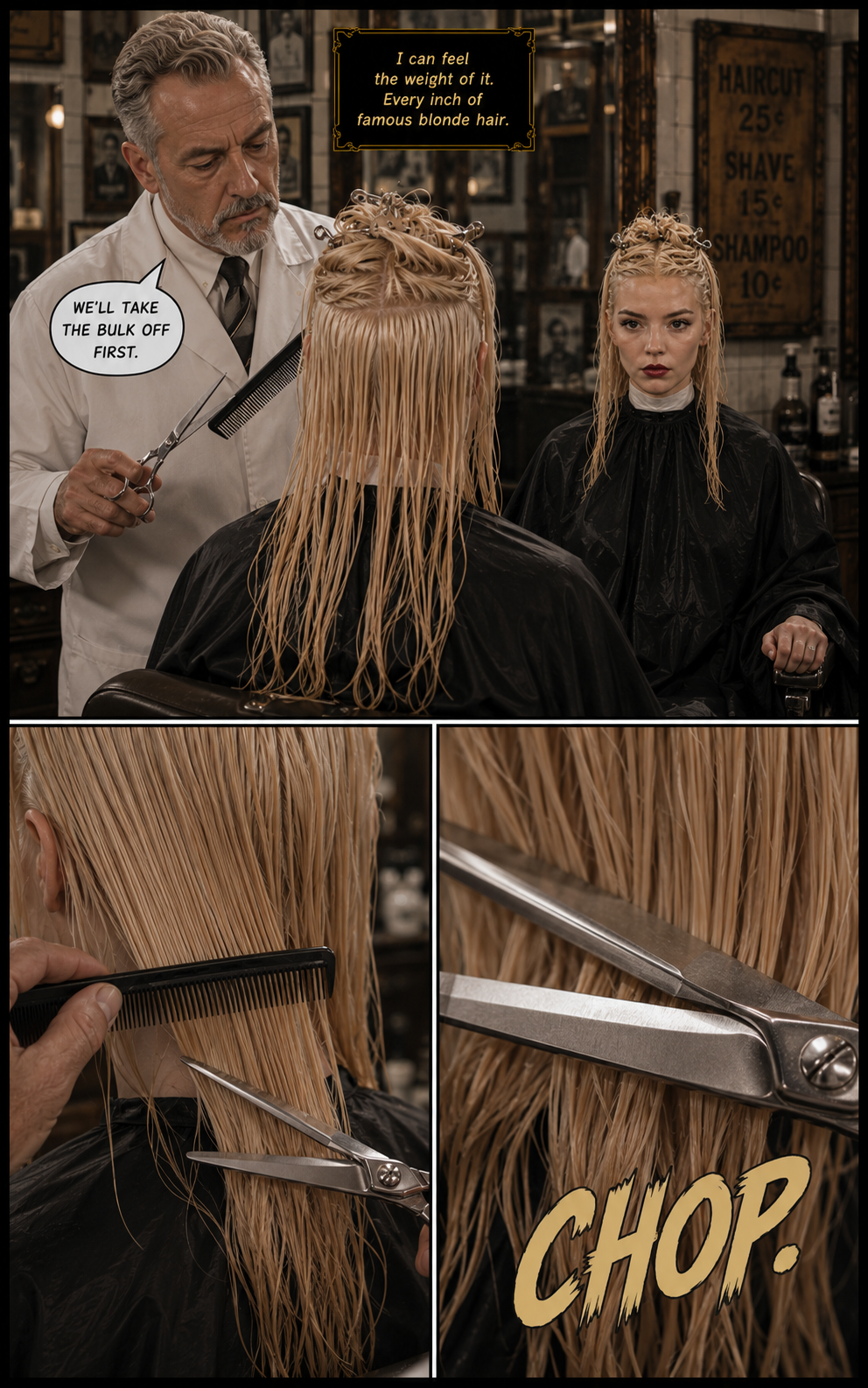
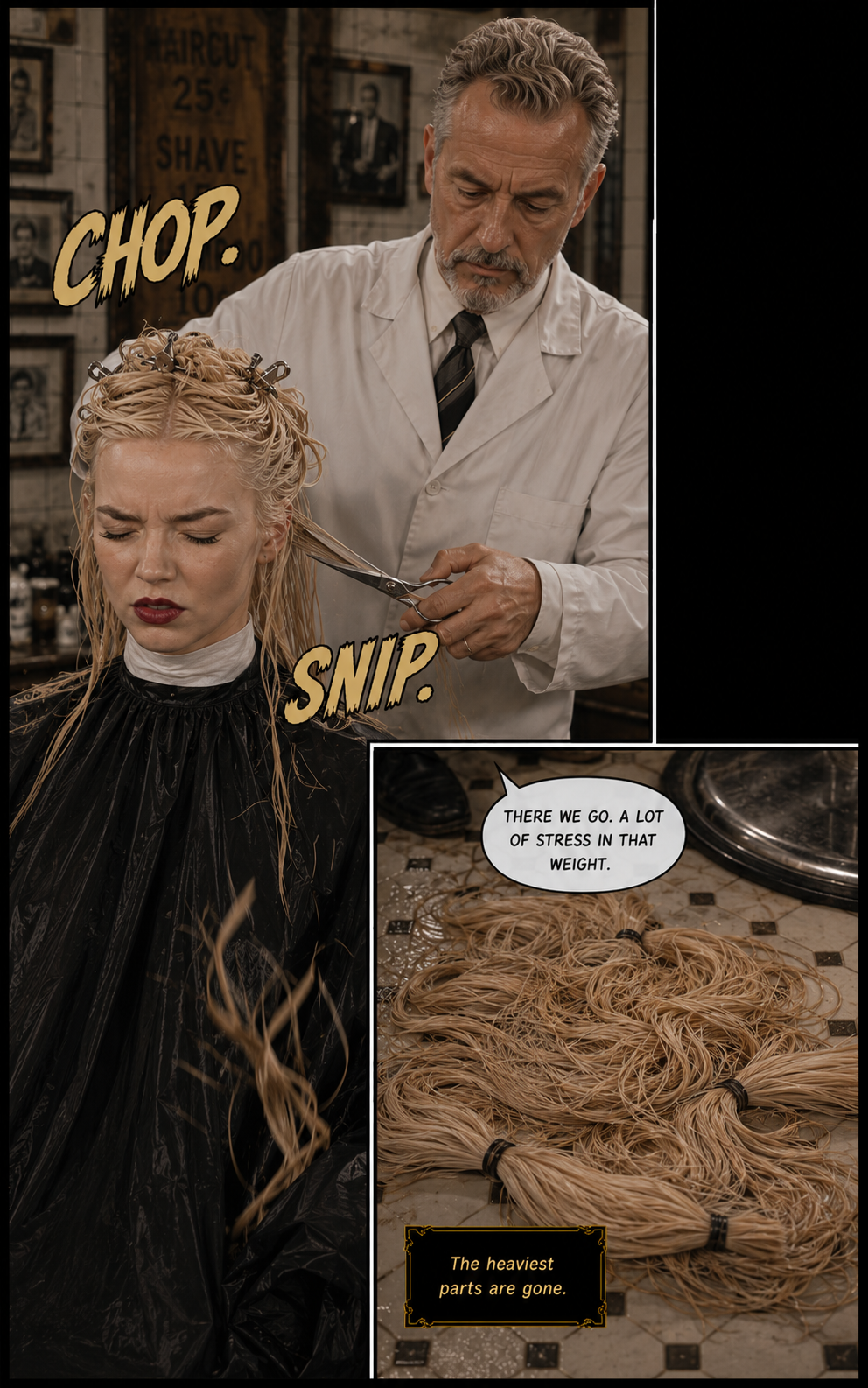
The barber stood behind her, his comb parting the dense, wet locks with practiced precision. “There’s a lot of weight here,” he muttered, assessing the monumental task ahead. “We’ll section it off first.”
Anya took a deep, steadying breath, gripping the cool metal armrests of the antique chair. No turning back now. The metallic click and sharp snap of the heavy metal hair clips echoed loudly in the quiet shop as he pinned the upper layers out of the way. This was it. The final barrier between her and total anonymity was about to be breached.
“Let’s make sure we keep you clean, miss,” the barber advised, adjusting the protective collar. “This is going to make quite a mess.”
The plastic cape let out a loud crinkle as she shifted her weight. The first cut was a loud, decisive chop, followed immediately by a sharp snip. A massive, heavy chunk of wet, blonde hair fell to the black linoleum floor with a soft thud.
“There we go,” the barber sighed softly, sounding almost relieved on her behalf. “A lot of stress held in that weight.”
Anya felt an immediate, shocking physical lightness. The heaviest parts were suddenly gone. “We’ll take the bulk off first,” the barber explained, moving methodically around the chair, his scissors flashing in the yellow light.
As the lengths fell away, she watched every inch of famous blonde hair hit the floor in a tangled, chaotic heap. Another heavy chop severed the remaining length at the nape of her neck, exposing the skin to the cool air of the shop.
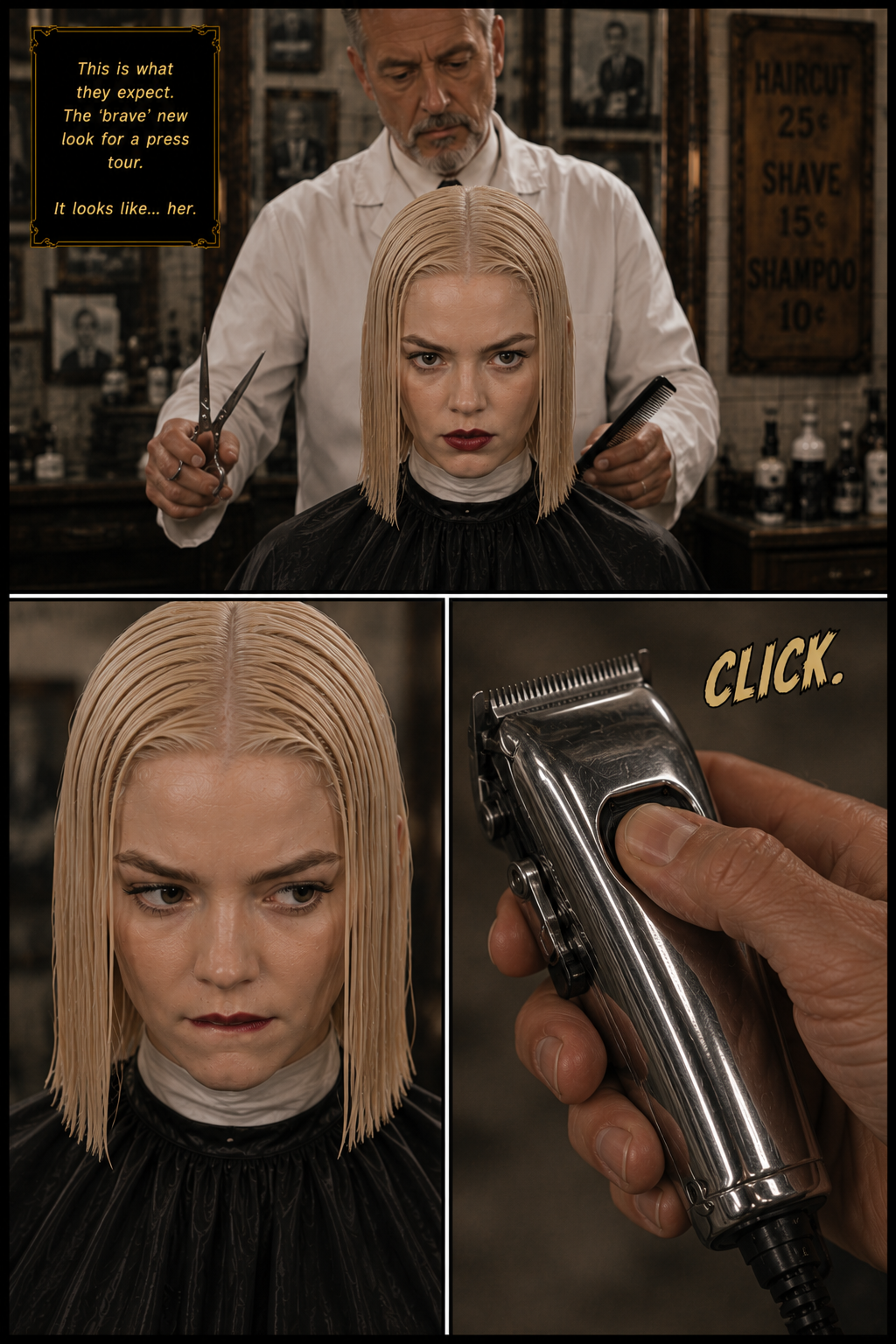
She looked closely at her reflection. She now had a chic, chin-length bob. A wave of profound disappointment washed over her. This wasn’t a disguise. This is exactly what they expect, she realized. It was the quintessential ‘brave’ new look for a press tour, the kind of dramatic chop actresses debuted on red carpets to signify a “new era” or a “mature” turn in their careers. It wasn’t an escape; it was just a highly marketable evolution.
It still looked exactly like her. It was still Anya.
She locked eyes with the barber in the mirror. He paused, scissors hovering in the air, reading the dissatisfaction in her expression. She gave a subtle, definitive upward nod.
He understood perfectly. There was a sharp click as he set the shears down on the counter and reached for the heavy, stainless steel clippers.
Part 5: Erasing the Anchors
He flipped the switch. A loud, vibrating hum instantly filled the small, quiet shop. He started at the back, driving the steel guard directly up the nape of her neck.
The sensation was incredibly strange and highly sensory—the cool metal vibrating violently against her bare scalp, followed immediately by the feeling of cold room air rushing over skin that hadn’t seen the light of day in decades. Handfuls of short blonde hair cascaded down the black plastic cape, sliding off her shoulders and onto the floor. Within minutes, the famous locks were completely eradicated, replaced by a pale, fuzzy shadow of stubble. The barber finished the process with a quick, refreshing shampoo at the basin to wash away the tiny, irritating clippings that clung to her neck.
Anya stood up, shrugging her trench coat back on. She walked slowly toward the full-length mirror near the entrance, her boots clicking softly on the floorboard. She raised a hand and tentatively touched the stubble on her head. It was shockingly light. It was radical. It was what fashion magazines would call “brave,” but she knew it was much more than that. It was an erasure.
She pulled the hood of her trench coat up, casting her face in deep shadow, and put her dark sunglasses back on. She was entirely unrecognizable to herself, a stranger staring back from the glass. But the lingering anxiety still twisted in her gut. But is it enough to make me invisible?
She studied her reflection critically. She realized then that hair was just one part of the complex equation of identity. A haircut is just geometry, shapes framing a face. The true signature—the thing the human eye naturally seeks out to recognize someone—is the contrast. Her dark, highly expressive eyebrows set against her pale skin were a dead giveaway. They were the undeniable anchors of her face.
She had to erase the anchors. She had to completely redefine the canvas.
Retreating to the shop’s small, brightly lit restroom, she locked the door. She pulled a small brown bottle of bleaching powder from her bag, purchased alongside the failed red dye. Beside it, she placed a tube of strong creme activator. It was a harsh, industrial mix, demanding a high-volume developer that was guaranteed to strip pigment aggressively.
She mixed the harsh chemicals in a small paper cup, the pungent smell of ammonia making her eyes water instantly. Using a tiny, stiff brush, she painted the thick white paste carefully and deliberately over her dark eyebrows. Her goal was absolute: disappear completely into the background.
As the minutes ticked by, the chemical reaction began to burn her skin. It stings, she thought, wincing slightly and pacing the small space. The harsh fluorescent bulb above the mirror was unforgiving, illuminating every pore. When the timer on her watch finally beeped, she leaned over the tiny sink and splashed handfuls of freezing cold water over her face, frantically rubbing the bleach away.
She patted her face dry with a rough paper towel and looked up. The result was genuinely startling. Without the dark contrast of her eyebrows to ground her features, her large eyes seemed to completely dominate her face, giving her an otherworldly, alien appearance. She looked entirely devoid of expression, like a blank slate.
It looks editorial, she mused, turning her head from side to side. Stripped of her defining features, she looked like a new character entirely—an avant-garde model for an obscure fashion magazine. Looking deeply into her own eyes, she knew the truth. It was still Anya, buried somewhere deep beneath the surface. But to the rest of the world? She was haunting. She was a ghost.
Part 6: The Cryptid of Paris
She thanked the barber, tipped him handsomely with a wad of cash, and stepped out of the barbershop into the early morning light. The rain had completely stopped, and the gray city was just beginning to wake up. Delivery trucks rumbled by, and the smell of fresh bread wafted from a nearby bakery. For the first time in years, she was out in the open without a security detail, a planned escape route, or a publicist hovering over her shoulder.
She walked briskly down the wide boulevard, pulling her coat tight, heading toward a quintessential Parisian café for a quiet morning espresso.
As she turned a corner near a luxury hotel, a man sprinting backward with a massive camera rig suddenly collided with her. The impact was hard. Anya stumbled backward, instinctively bracing herself for the inevitable flurry of flashes and the screaming of her name.
But the man just scowled at her, aggressively adjusting his heavy equipment. “Watch where you’re going, weirdo!” he barked without a second glance, completely failing to register the face he had spent the last three days hunting. “We’re looking for someone important!”
“Come on, she’s supposed to be coming out this way!” he yelled over his shoulder to his trailing colleague, who was equally weighed down by camera gear. The two paparazzi scrambled away down the block, completely ignoring the pale, bald woman in the trench coat standing right in front of them.
A slow, genuine smile spread across Anya’s face, reaching her wide eyes. Finally, she breathed out, the tension leaving her shoulders. Invisible.
She took a seat at a small, round metal table outside the cafe, the weak morning sun warming her bare scalp. She ordered a black coffee and pulled out her phone, reflecting on the night’s chaotic, transformative journey. It was, without a doubt, the greatest thing she had ever done for herself.
