 Chechako
Author’s Note
Dear Reader,
This story contains explicit sexual content, including scenes of psychological manipulation, BDSM, and various forms of fetishism, and is intended for mature audiences only. If this content is not for you, you may stop reading at any time and close this page.
All events and characters in this text are purely a product of the author’s imagination. The author is not aware of whether any events depicted have occurred in reality, in whole or in part. Any resemblance to real persons, living or dead, or to actual events is entirely coincidental and unintentional.
All images have been created using artificial intelligence, and any resemblance to real persons is accidental.
The author utilized artificial intelligence for story development and dialogue.
Author’s Note to Part I
Dear Reader,
This chapter does not contain any hair cutting scenes. Its purpose is to set the context for the story, helping the reader understand the subsequent actions and relationships of the main characters.
The author is grateful to their fans for the creative and financial support in writing this series.
In writing and developing the plot, the author was inspired by the works of Ls Ds:
https://web.archive.org/web/20140418223325/http://www.haircuttingstories.com/author/Ls_Ds.aspx
Foreword
It all began eight years ago at the Massachusetts Institute of Technology. Elena, a new student in the chemistry department, was sitting sadly under an old maple tree, re-reading her notes. The autumn air already smelled of cold.

“Hey, why the long face?” a ringing voice called out to her.
Elena looked up and saw Sarah – that delightful imp, with a mop of unruly red hair that shone like the sunset leaves.
“Oh, just reading,” Elena shrugged shyly.
“Come on! Ditch that. Come with me to a bar, let’s have some fun. Sitting alone is a crime,” Sarah smiled.
And that’s how they met. And then, slowly and inevitably, love blossomed – between the shy freshman who didn’t consider herself a beauty, and the bright, bold grad student. Elena was one of those few who preferred to love women. And fate, as if laughing, had presented her with Sarah – someone just like her.
Thus began eight unforgettable years, marked by happiness, shared dreams, and the certainty that they would conquer the city together. Until the illness came. At first, it seemed like everything would be okay. But surgery followed surgery, chemotherapy cycle followed cycle, and the disease didn’t retreat, methodically draining not just her strength, but all their money, all their hope.
Loss. New York
Rain drummed on the roof of the taxi, turning the lights of Times Square into blurry acid stains. Elena looked out the window, seeing nothing but the reflection of her own face – tired, with dark circles under her eyes. She was a dark-skinned, slightly plump girl – unattractive by glamorous standards, but with large, overly expressive eyes. The kind of eyes like a certain European actress had when she played lost, much-suffering heroines. Financial problems – cheap food, no money for the gym, stress – had taken their toll.

The taxi dropped her at the entrance of Memorial Sloan Kettering.
Cold, sterile light. The same cold unemotional, frightening elevator and ward.
My friend Sarah. The one I shared a tiny Brooklyn studio with eight years ago, dreaming of taking the city by storm. Sarah lay there, tethered to her IVs. Her head was bald. Chemotherapy had taken away her greatest pride – that wild, untamed mane of fiery red hair, the very reason she was once called “Venus,” after Botticelli’s famous painting. Now, all that remained of that Venus were her eyes- enormous, too large for her gaunt face.

On the screen above the bed, a celebrity gossip show was playing. And there, radiant, was Anna Kovalska. Polish-born star. A rising star of independent cinema, the face of the “New Hope” charity foundation. She was holding a bald child, smiling at the camera, and the captions read: “Every dollar you send to my foundation is a chance at life.”
Sarah weakly moved her hand, pointing at the screen.
“Look, Elena,” she whispered, and in her voice was that fragile, vital hope. “People don’t become indifferent and greedy, even when they reach the top.”
Elena squeezed her hand, looking at the radiant, flawless face on the screen. At the perfect teeth and blonde hair styled in a careless, yet wildly expensive, wave.
Three weeks later, Sarah was gone. She was buried in a wig. The red artificial strands lay on the pillow of the coffin, screamingly bright and hopelessly foreign.
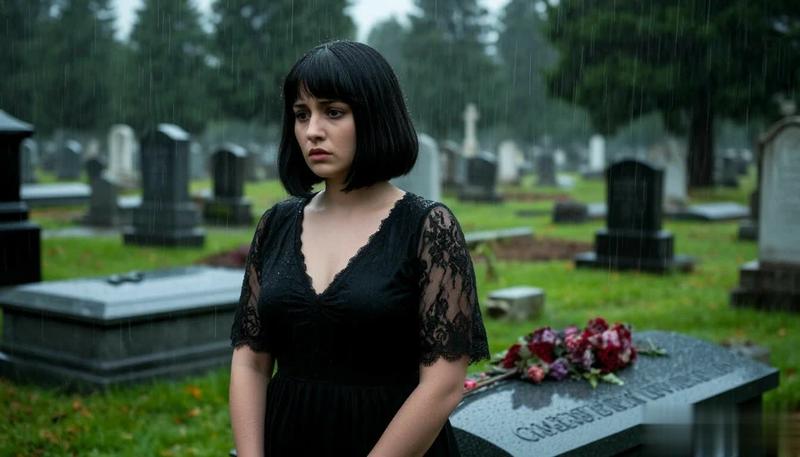
A Weapon in the Hands of Fate
Six months passed. Elena got a job as a makeup artist on the set of a series for a streaming giant. The lead role was played by Anna Kovalska, a foreigner who had conquered America.

She was preparing her brushes in the supply closet when a man in a perfectly fitted suit, whose cut and quality screamed wealth, entered the star’s adjacent dressing room. He was clearly a rich man – a financial partner at a prestigious consulting firm. The door didn’t close all the way.
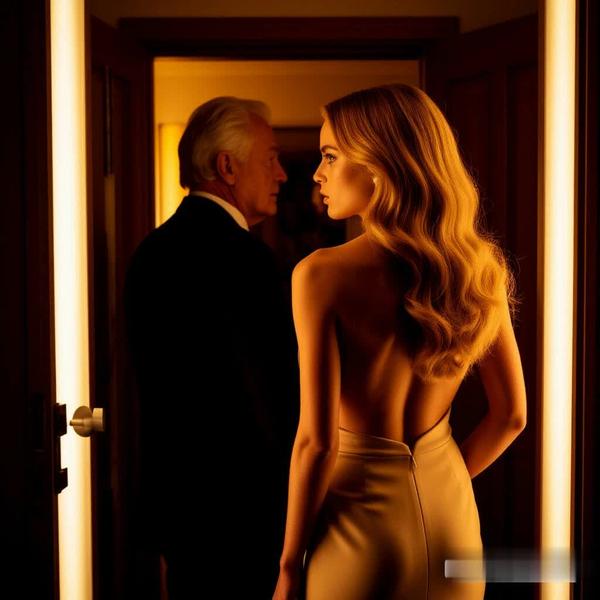
“…so, after the last ‘New Hope’ gala, the foundation’s account balance is twenty-four million, seven hundred thousand dollars,” a male voice said.
“Perfect,” replied Anna’s voice, velvety, with almost no trace of an accent. “Now, Mark, the issue. My house in Bermuda is waiting for its yacht. How can we most… effectively handle the transaction? So that our generous donors (this was said with sarcasm and irony – she knew people sometimes sent their last penny for the idea) don’t ask unnecessary questions, and Uncle Sam gets his cut, the minimum.”
A light, knowing chuckle from the financier.
“Aphrodite” will be waiting for you, Ms. Kovalska. We have a setup through a charitable trust and a Cayman Islands company. The tax authorities will only see expenses for the foundation’s ‘administrative needs.’ All clean.”
“Brilliant. Those sick children… they’re going to die anyway, sooner or later. But I need that yacht now… I deserve the best, and there’s no point in putting it off.”
Silence followed, broken by the sound of champagne being poured into glasses, and then the soft clink of glass against glass.
Elena stood with her back pressed against the cool wall. Her ears were ringing. She looked at her hands and saw not them, but Sarah’s hands — emaciated, bruised from the IVs.

And that red wig on the coffin pillow.
Quietly and clearly, a question formed in her mind.
“Am I a trembling creature?” she thought. “A miserable, poor fool who can only weep at a grave? Or… do I have the right?”
The right to what? Personal revenge? That seemed too petty, almost insulting to Sarah’s memory. And then another thought, cold and previously foreign to her, seeped into her consciousness:
What if this isn’t my right? What if this is… an assignment? What if this emptiness inside me after her death isn’t just grief, but a space for a will stronger than my own? To see such a thing and do nothing – isn’t that a sin? Maybe God, or Fate, or whatever you want to call it, was just waiting for the right tool? Someone whose own life is worth nothing. A tool that can carry out an unpleasant but necessary task to the end. An instrument that doesn’t even need to be blessed – you just need to get out of its way.

She didn’t believe in God. But the idea felt… right. God isn’t a good Santa Claus who gives gifts to everyone. He is just, and that means He might also be unkind.
It lifted the burden of personal, searing rage and resentment at the injustice from her, transforming it into a quiet, cold purpose, a duty to execute a higher justice.
All these thoughts flashed through her mind, and it felt like an eternity had passed, though in reality, it was only moments.
She slowly exhaled. The gaze of her large, dark eyes in the dim mirror across from her became focused and incredibly calm.
“I don’t have the right,” Elena finally decided, gathering her brushes. “But maybe, someone “through” me does. It won’t be me taking revenge. I will be the one through whom injustice corrects itself. An instrument in the hands of a Higher Power, that will carry out Justice.”
The Trap is Set
Anna Kovalska’s morning began with the first sip of an ice-cold celery and lime smoothie.
Her Manhattan penthouse floated above the city like an ice palace of glass and steel. Today there was an important meeting about a new role, though all her thoughts were on the future yacht, “Aphrodite”. The perfect name. She, a Polish girl from near Wroclaw, would be cruising the waters around her Bermuda home on it. America had given her everything. If you want to have it all, you take more and don’t look at those who weren’t so lucky. In the world, those who win are the ones without pity or compassion. And she had learned to take more.

On the film set, the usual chaos reigned. Anna entered her dressing room and stopped. Near the table stood a new girl – a makeup artist.
Anna sized her up quickly: short, a bit plump, in a simple black t-shirt. Her face… pretty, but prematurely aged. Large eyes, like a startled doe. Her overall appearance marked her as someone of modest means – a simple haircut, no manicure. A typical worker, one of thousands. Gray, unremarkable background.
“I hope at least she has golden hands. I need flawless makeup today.”
“I’m Anna,” she said, presenting herself like a queen as she sank into the chair.
“Elena,” the girl introduced herself quietly. Her voice was soft, but without a hint of sycophancy.
Her fingers, touching Anna’s face, were surprisingly light, precise, and… neutral. Professional, cold, clean. Anna closed her eyes, letting the makeup artist work, her thoughts drifting to the blue Bermuda sky. She didn’t even remember her name. Why bother? There are so many of them. Today Elena, tomorrow some Maria or whoever. How many had she seen – gray noise against the backdrop of her dazzling beauty.

She didn’t see how, in the mirror behind her, Elena’s large dark eyes paused on her reflection for a second. There was a cold, appraising look in them. The inquisitor’s Gaze.
The master was observing the object of future work. Everything was right. It was only just beginning.
The silence in the apartment after Sarah’s death wasn’t emptiness, but a thick, viscous, transparent invisible slime in which ordinary thoughts drowned. Elena didn’t allow herself to simply grieve. Grief wasn’t just pain, but the engine of a cold fury. She sat in the twilight of her room in Queens and carried on an internal dialogue, methodically examining her thoughts for flaws.
The Goal: not murder. Death is mercy. Anna must remain alive, but cease to be herself. She must feel it. Go through, step by step, every circle of hell that Sarah went through. She herself must joyfully lose everything. And only then, Elena would decide – whether to leave her as she becomes, to let her vegetate, or to kill her, to end the suffering.
Elena closed her eyes, and the image of Sarah in her last weeks appeared before her. Her shoulders shook with an internal sob. But she had to be strong to carry out the plan she had devised.
“What she must become after the transformation: She must find ecstasy in what once disgusted her. In dirt, in smells, in acts of desecration.”
The goal was clear.
The question of method remained. How to achieve such willing self-destruction? Elena weighed options like instruments on a surgeon’s table. The internal dialogue took the form of a strict debate:
Hypnosis?
Pro: Non-invasive, leaves no traces. Can provide access to the subconscious.
Con (and this argument outweighed the others): Requires either high suggestibility of the subject, or their consent to deep trance. Anna is distrustful, cynical, smart, and logical. She would never submit voluntarily, and hypnosis doesn’t work by force. Alas, not suitable.
Neuro-Linguistic Programming (NLP), Manipulation?
Pro: Powerful tool for creating frames, steering through language and emotion. Can be used constantly, adapting.
Con: No guarantee it will work. There’s always a chance the spell could break. For such deep personality restructuring, for inverting basic instincts (disgust, self-preservation), a hack at the chemical level is needed. NLP can guide, but it cannot break down the wall of will. “Suitable as an auxiliary tool, after “the wall” has been destroyed.”
Psilocybin, LSD, Psychoactive Substances?
Pro: Capable of radically altering perception, inducing mystical experiences, breaking down the ego.
Con: Too unpredictable. The result is a lottery. Could cause psychosis, paranoia, but not a directed, controlled transformation. She could easily go insane, or commit suicide. “Too crude. Too high a risk of losing control over the process.”
The conclusion was obvious: a method was needed that acts directly on neurochemistry, rewrites basic patterns, suppresses will, while leaving intellect and consciousness relatively intact – so the victim understands what is happening to them, but cannot and does not want to resist.
A key to internal reprogramming was needed.
This is what drove her to delve into the darkest corners of the darknet. She was looking for anything – clues, case studies, archived leaks about forgotten intelligence agency research. For hours, days, weeks.
And she found it. An abandoned post on some forum for crazed conspiracy theorists, a message lost among all the spam, not updated for years: “Selling a means of control. Full effect. Legacy of the past. Formula #7. You know.” Although the text was short, it was written with grammatical errors, somehow incorrectly, as if the author was a foreigner, and English was not his native language. Elena’s heart stopped in anticipation. “Legacy of the past.” It could have been anything, but for some reason, she thought of Soviet scientists – many came after Perestroika to the USA, and worked at any job, even as gardeners. Probably, this line of thought was prompted by an episode of “The Big Bang Theory”, where Sheldon dismissed the answer of a janitor who turned out to be an elderly, brilliant Soviet mathematician. He left an encrypted email address.

Almost instantly, a reply came- a link (apparently an automatic email response) to a one-time test that had to be passed.
The test was difficult, and if Elena hadn’t had a chemistry education, she probably wouldn’t have passed. Apparently, that’s how the mysterious seller filtered out the noise.
But she solved it.

An address appeared on the screen: a house somewhere in rural Vermont, and the word: “Raven“.

When she arrived, disappointment awaited her: a padlock hung on the door, and a phone number to call was posted.
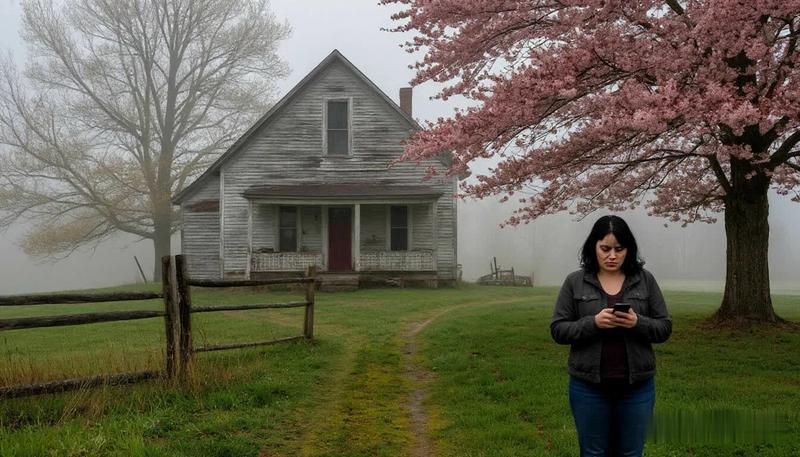
In a small office in the nearest small town, she was met not by a real estate agent, but by a lawyer.
“So you say you need to meet the homeowner?
Alas, there’s nothing I can do to help.
Kurt died two years ago.”
The lawyer looked upset – apparently, he had hoped for something else.
“Kurt was a good man. He literally saved me with his therapy sessions. Free of charge,” – the lawyer walked to the window and looked out at the street, his back to Elena. “He only asked for one favor in return. To hand over the house to someone who knows him. I couldn’t refuse old Kurt anything. But alas, Kurt…”
“So, you don’t need anything else from me?” he said sadly, making a motion as if to usher the visitor out.
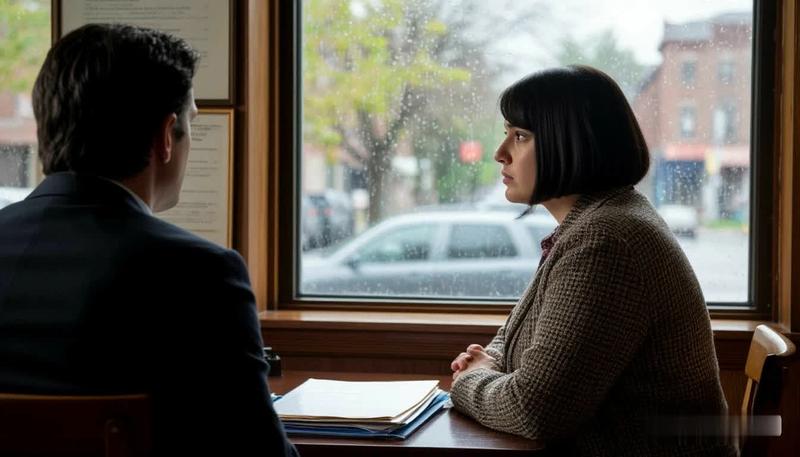
Elena remembered that besides the address, there was the word.
“Raven,” she said quietly.
“Well, why didn’t you say you were his relative and heir!”
The lawyer’s face changed; from bored and inhospitable, he became cordial. As if under a spell, he frantically reached into the safe and pulled out a folder.
“I really thought it would be a man, but the will clearly states that the relative will say ‘Raven.’ Kurt spoke English poorly, I must have misunderstood him…”
The lawyer quickly took matters into his own hands and handled all the formalities. He was even so kind as to pay the inheritance tax. “I owe old Kurt so much,” he explained his unusual act. As if freed from something that had been weighing on him and holding him back.
So Elena unexpectedly became the owner of a small abandoned farm and all the property on it.
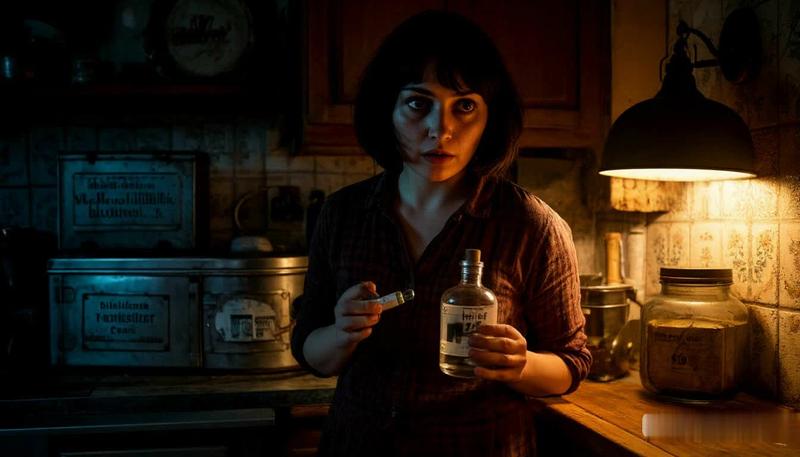
When she returned to the farm, it took her a long time to find what she needed. But she finally did—one of the kitchen walls was covered by a false panel, behind which was a safe. The key was nearby. In the safe were boxes, marked with Gothic script: “K. Schmidt. Pers. Notizen & Labormaterial.”
By the light of a desk lamp, she opened the boxes like an archaeologist. And she found it. Among the diagrams, diary entries full of technical terms and lapses into paranoia, lay ampoules labeled “#7” and instructions in German.
Studying the diaries of Kurt Schmidt, a former Stasi scientist who fled to America with his most terrible creation, provided the answers. It wasn’t just “truth serum.” It was a “Reagent for the reorientation of volitional and aesthetic paradigms.” A chemical key, opening the door for direct personality editing. The most effective method was aerosol spraying in a confined space or through a breathing mask. The patient, unaware of the manipulation, would believe their actions were their own.
Elena picked up the cold glass ampoule, held it up to the light. The colorless liquid seemed innocent.
The internal dialogue fell silent.
“Am I a trembling creature?” – this question now seemed ridiculous. A trembling creature fears consequences. For her, consequences were merely stages of the plan.
“Do I have the right?”- this was no longer a moral question. She had found the perfect instrument. That meant she had the right to use it. She was the executor. The hand that fate itself, in the form of blind chance, had provided with a scalpel.
The plan matured, perfect in its simplicity. Oxygen therapy on set. Anna, perpetually concerned with her well-being, her “biohacking,” wouldn’t refuse a procedure promising vigor and clarity. A mask. A deep breath. And the quiet, irreversible surgery of the soul would begin.
The day arrived.
Anna came to the set irritated. Her morning had begun with unpleasant, mechanical sex with another wealthy admirer- a venture capitalist who believed access to her body was part of the sponsorship package. His penis, average and unremarkable, slid inside her without touching any meaningful spot; his tongue, clumsy and limp, left only a faint feeling of disgust on her skin. The only pleasant tactile sensation was the coolness of the new Cartier earrings digging into her earlobes.
Her own body, usually an obedient and well-trained instrument, frustrated her today: her vagina remained somewhat dry, her skin was painfully sensitive, and her lower abdomen ached with a vague, unsatisfied longing. It was in this state – with her nerves frayed and her skin literally crying out from another’s inept touch- that she entered the dressing room and saw Elena. She didn’t recognize her- why remember faceless servants?
The new makeup artist (she didn’t recognize Elena) wasn’t ugly in the classic sense. But she smelled of… poverty and economy: the pungent odor of cheap deodorant spray, fighting and losing against a slight sour scent of sweat, and a faint trail of coffee and a sandwich.
“Good morning, Ms. Kovalska,” Elena said quietly, already preparing her brushes on the table. Her voice was soft, without a hint of sycophancy.
“Morning,” Anna snapped, sinking into the chair. Her back instinctively arched, minimizing contact with the chair’s back.
Elena began to work. First, cleansing. Her fingers, cool and confident, applied micellar water to Anna’s face.
“You have an ideal skin texture,” Elena remarked, dabbing on toner. “Rare to see such hydration without signs of injections.”
“Genes and expensive skincare routines, dear,” Anna muttered, closing her eyes. But the compliment, delivered without flattery, as a simple observation, softened her slightly.
“Visible,” Elena said simply.
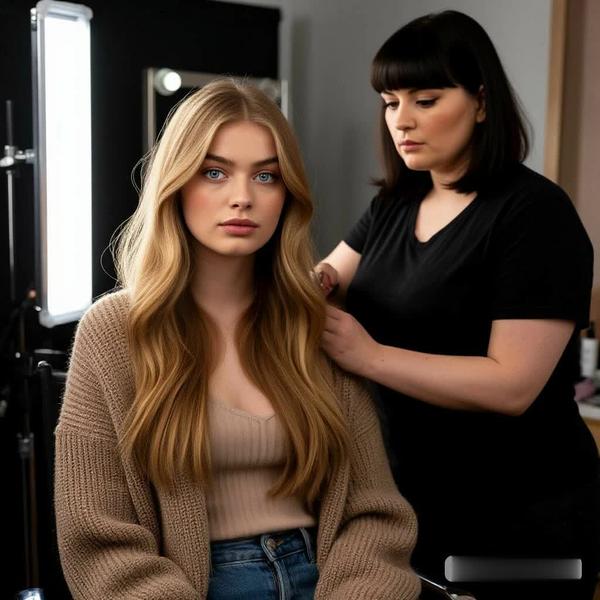
Then, foundation. The brush glided over the skin with professional precision. Each touch was light, but Anna still felt irritated.
“You seem tense today,” Elena noted, working on the cheekbone area. “Facial tension patterns. Try to relax.”
“Easier said than done,” Anna grumbled.
Then, the eyes. Elena stood so close that Anna could feel her warmth and that complex, poor-person smell. But her movements were so precise, so confident, that irritation gradually gave way to tired acquiescence. She watched in the mirror as these full, unattractive hands worked their usual magic on her face.
“Your hair,” Elena said, starting on the styling. She took a strand of that famous “wheat-colored” hair, so beloved in shampoo commercials, in her hands. Her fingers, working with the comb and dryer, touched her scalp. “It’s very beautiful. But also very heavy. It must be difficult, constantly styling it.”
“Habit,” Anna replied through clenched teeth, but her eyelids were already growing pleasantly heavy. Touches to her head always relaxed her, and today they seemed like the only anchor in a sea of irritation.
The shoot became torture. Anna couldn’t find the right angle, her movements were wooden, her gaze empty. The director yelled, the light stung her eyes, the costume constricted her. By the break, she felt drained, both mentally and physically. And it was at that moment Elena approached her, and in the calm tone of a medical professional, said:
“You look exhausted,” Elena said, her large eyes looking straight ahead, unwavering. “May I offer you some oxygen? It’s not a cure-all, but it can help relieve acute tension. Many actors use it.”
Anna, lacking the energy even to nod, just waved her hand. Permission. Elena brought the mask to her face. Anna pressed it on and took a deep, desperate breath, craving coolness and purity.
Instead of the expected odorless cold air, she inhaled a strange, sweetish-bitter substance with barely perceptible notes of ozone and almonds. The scent seemed… pleasant. Just unusual…
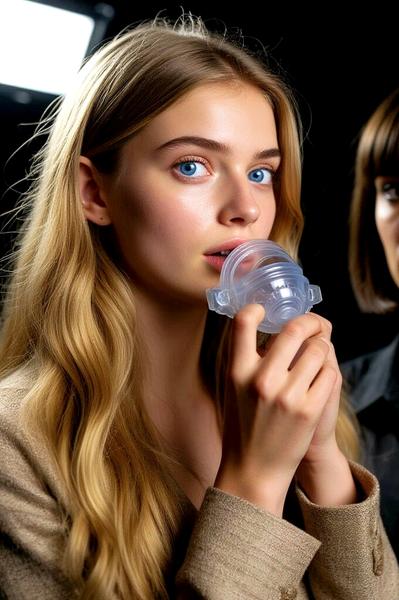
And immediately, a wave of warmth spread through her body, blood rushed to her skin, goosebumps ran down her spine. The muscle tension in her shoulders and jaw released, as if invisible wedges had been removed. The irritation that had been building for hours evaporated somewhere, and in its place arose an inexplicable, warm wave of gratitude towards this plain girl.
Anna removed the mask. The world around her seemed to play in softer colors. Her voice came out unusually gentle.
“Thank you… that really helped. What’s your name?”
“Elena.”
“Elena, you’re… a good professional,” Anna said, and this time it wasn’t just politeness. The chemicals in her blood were already beginning their work.
But the old conditioned response, the reflex of superiority, fired on its own, slipping out of control:
“But forgive me… you… smell slightly… unpleasant.”
Elena’s face didn’t flinch. Only in the depths of her large eyes did a shadow flicker – not of hurt, but of something else, cold and appraising. But her voice remained even and submissive.
“Sorry. Didn’t have time to change after my jog to the subway this morning. I’ll try to be more careful.”
They didn’t speak again until the end of the shoot. But when it was all over, and Anna once again felt the fatigue and irritation rolling back like a tidal wave, she herself, without being asked, turned to the makeup artist who was packing up her brushes.
“Elena… that oxygen… is there any left?”
And Elena, with a barely perceptible, slightly sad curve of her lips, brought the mask to her face again. This time, Anna inhaled deeper, eyes closed, sinking with pleasure into the promised coolness and the sweet, deceptive almond scent that now seemed her only salvation.

The serum was doing its work, quietly and irreversibly rewiring neural pathways. What began as fragile trust quickly grew into an obsessive attachment. Anna caught herself scanning the crowd of staff for the familiar short figure, and her day felt incomplete without a few minutes spent under the oxygen mask in dressing room.
Now their sessions had become a ritual. Anna came not only tired, but with an inner hunger that was sated only by the sweetish almond smell tickling her nostrils. She began to share trivialities with Elena during makeup:
“My agent is trying to push me into that stupid rom-com again,” she’d say, as Elena carefully applied her eyeliner.
“He’s afraid you’ll drown in serious cinema,” Elena would reply quietly, her fingers incredibly precise. “Afraid you’ll stop being… a convenient commodity.”
“A commodity?” Anna would frown.
“Sorry, maybe I’m being too blunt. But isn’t that it? They sell your image. They’re scared to change it, afraid it might spoil and lose its value.”
Anna would fall silent, absorbing the words as Elena applied her makeup with brushes.
Another time, after particularly humiliating comments from the director about her “unnatural coldness,” Anna, trembling with rage, collapsed into the chair for evening makeup removal.
“He’s just an animal!” she breathed out, letting Elena remove her mascara. “I can’t take it anymore. He wants me to sob on camera like a hysteric!”
“Breathe deeply,” Elena commanded softly, handing her a glass of water, and then the mask. “You shouldn’t get so worked up. Your beauty and talent… aren’t for him. They demand a different kind of treatment. Maybe you should turn down his project? He’s clearly unworthy of you.”
The words, steeped in serum and false care, fell on fertile ground. “They are unworthy of you.” Anna closed her eyes, inhaling the thought along with the gas. Yes, maybe they truly were unworthy of working with her.
And Anna began to distance herself. First from the director, then from “superficial” friends, from her “greedy” agent. Her world, already narrow, began to shrink to the size of the dressing room, the penthouse, and the obsessive thought of the mask.
But there were other conversations.
So, while taking off her makeup after a full day of filming the series, Anna reacted very harshly to some remarks about faithfulness from a certain business celebrity—something about how one must honor God’s commandments.
«You know where you can go, you hypocrite. When you picked up the clap from a hooker at that party and then passed it on to your wife—what commandments were you remembering then? Or when you knew that not all those girls were of age, but none of your buddies gave a damn?
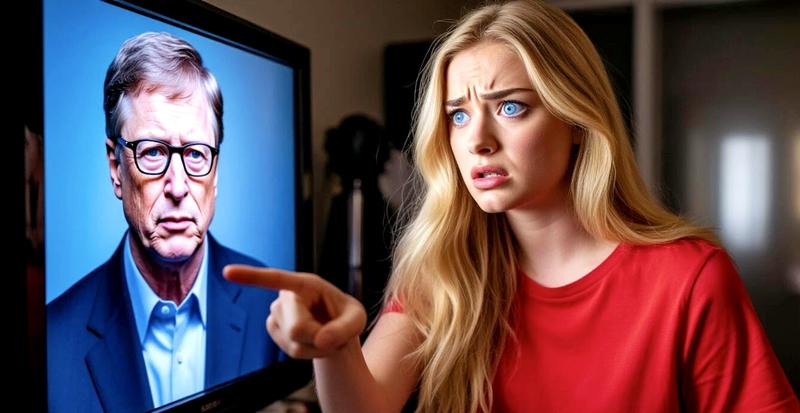
Why don’t you just be honest and say that money is everything in this world. If you’ve got money, no laws apply to you: not state laws, not moral ones. Do whatever you want. And that’s how it should be—a rich man is a strong wolf who does whatever he wants with the herbivores and the weak. You can’t be merciful or kind—that’s not what this world is about. All kind people are weak.

The sooner you get money, no matter how, the easier it is to live and boss the poor around, lecturing them about morality, just like that four-eyed freak…»
Elena reacted in silence to this outburst of raw honesty from a young, aggressive girl desperately trying to become a she‑wolf. But she knew that wasn’t true—giving others happiness and hope is the meaning of life.
The subtlest manipulative influence Elena reserved for moments when the serum worked most powerfully – immediately after the session, when Anna was relaxed, pliable, and most suggestible.
“You looked tired on set today,” Elena might say, brushing her long hair after the oxygen mask. “Maybe you should rest? Save yourself for something… more important.”
“But I have a contract…” Anna would weakly object, her will dissolving in the pleasant atmosphere.
“Contracts come and go,” Elena would whisper, her breath warm near the model’s ear. “But you, you’re the only one you’ve got. You have to listen to your inner self. And it’s asking for peace.”
Anna began to “listen.” She canceled a couple of castings, citing illness. Her agent grew worried, but she brushed him off with an irritation she wouldn’t have allowed herself before.
One evening, when they were alone in the empty studio, Elena, while putting away her brushes, “accidentally” knocked a box of wigs onto the floor. One of them, short, black, and edgy, rolled to Anna’s feet.
“Oh, sorry!” Elena exclaimed, but her eyes carefully studied Anna’s reaction.
Anna picked up the wig, her fingers squeezing the stiff synthetic strands.
“Weird…” she murmured. “It’s so… prickly.”

“It’s for a cyberpunk series shoot,” Elena explained, stepping closer. “You have beautiful long hair. But you know… sometimes beauty is a limitation in freedom, in creativity. This wig… it would suit you. With your features… it would be bold. It would show everyone you’re not afraid to change. That you’re stronger than they think. That you can be different.”
Anna tried on the wig in front of the mirror. Her own familiar reflection disappeared, replaced by a beautiful stranger with a daring haircut.
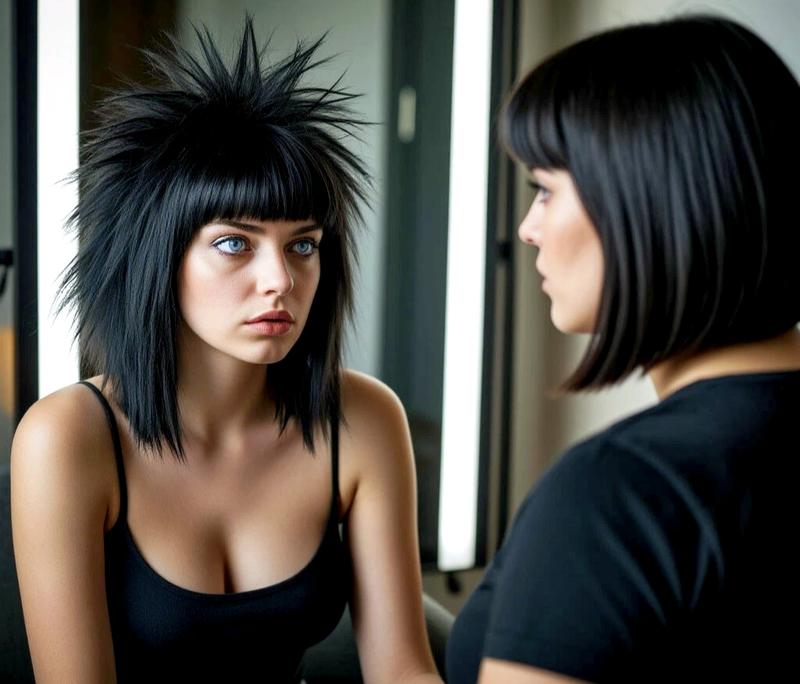
And instead of disgust, she felt a strange rush of freedom. Was it her own thought or Elena’s? Unclear. But it took root like a seed falling on fertile soil. Anna, without taking off the wig, looked at Elena with adoration.
Elena’s ideal height, her 155 cm and her dense, even plump figure with slightly sagging breasts and thick legs, began to seem more feminine and attractive to her than her own luxurious, slender body with its beautiful C-cup breasts and long legs. And her 185 cm now seemed wrong, disproportionate for a woman.
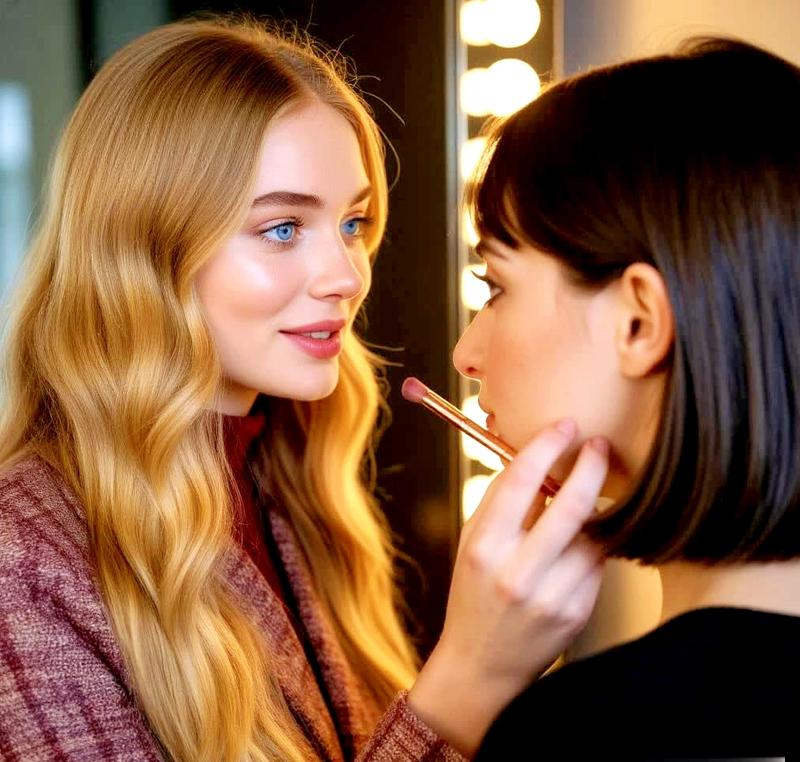
And then her sense of smell, already tuned and perverted by the chemical almond scent of the serum, caught another, deeper and more animalistic odor. The smell of Elena’s body. The very one that had once caused mild revulsion. Now it rushed into her in a thick, warm, almost tangible wave. It was no longer the smell of sweat or cheap deodorant. It was the smell of life – real, unconcealed, working flesh. It carried the musk of skin, salts, something warm and elusively feminine. It was frankly physical, intoxicating, like the rarest and most depraved perfume.

Dear Reader,
Anna’s transformation is nearing. Since the second part isn’t finished yet, you have a chance to share your wishes on how you would like Anna to transform.
You can leave your responses in the comments here, or send them to: [email protected]
I might decide that your idea is interesting and use it in future parts